

Your Company Already Produces the Evidence AI Needs to Recommend It. Kalicube Pro Helps You Turn That Evidence into a Managed System.
Published · Written by Jason Barnard
Your company has thousands of pages across its websites, hundreds of employee profiles, customer reviews, product descriptions, industry references and years of successful projects. Somewhere in all of that is the evidence that your business solves the problems your ideal customers face.
That evidence isn't organized in a way search engines, AI assistants and AI agents can use reliably. Different departments publish different descriptions of the company, customer outcomes sit inside operational systems, and independent sources confirm claims your own website never links to. Meanwhile, the machines are deciding which businesses to recommend.
For a corporate brand team, the challenge is no longer producing more content or tracking where the company appears in search results. It's managing the information, evidence and relationships the machines use to understand the brand and decide whether to choose it. That is the job of Digital Brand Intelligence and Digital Brand Engineering, and it's what Kalicube Pro is built for.
Search engines, AI assistants and AI agents need a dependable account of the business before they can choose it
Jason Barnard, who founded Kalicube, puts the machines' goal in two sentences:
Search and AI engines are designed to get their user to the best solution to their problem as efficiently as possible. Your job is to help them do that, when you are the best solution.
Search does that by finding and ranking information. An AI assistant evaluates the options and recommends suitable suppliers, and an AI agent chooses and acts within its user's mandate. The more of the journey the machine takes on, the clearer and more reliable its understanding of each business has to be.
Take a multinational that sells specialist industrial equipment. Its product team publishes technical specifications, marketing describes applications and benefits, local teams run regional websites, sales knows which customers the equipment suits, operations holds availability and delivery information, and customer service records what happens after installation.
To an employee, these are parts of one organization. To a machine reading information from many sources, they're incomplete or conflicting accounts. If one source says a product is for large enterprises, another presents it for small businesses and a third carries outdated specifications, the machine has to decide which account to believe. The company can't fix that by optimizing one page. It needs a coordinated system for its information and evidence.
Digital Brand Intelligence shows how the machines understand, evaluate and represent your brand
Before a company can improve how the machines represent it, it needs to know what they currently understand. That's the intelligence problem.
A conventional SEO report shows rankings, impressions, organic visits and technical issues. Those numbers remain useful, and they don't tell you how AI systems describe the company, which facts they associate with it, or whether they recognize which customers it suits.
Digital Brand Intelligence is the practice of analyzing how algorithms currently understand and represent a brand across digital platforms. It asks:
- Does the machine identify the correct entity?
- Does it understand the company's current offers and areas of expertise?
- Which claims does it repeat confidently, and where does it use outdated information?
- How does it describe the business when somebody asks about it by name, and how does that change when a buyer asks which supplier to choose?
The distinction matters because a business can be highly visible in search while AI systems misunderstand its positioning, and a technically excellent website can still be missing from commercially important recommendations. Kalicube Pro is the platform teams use to see the evidence and the representations that matter for their brand, and to move from separate channel reports to one view of how the machines understand and present the business.
Digital Brand Engineering turns that intelligence into systematic improvement
Intelligence alone doesn't change what the machines say. Once the company knows where its representation is incomplete or inconsistent, it has to improve the information and evidence behind it. That's the engineering problem.
A brand team might find that AI systems describe a recently expanded company by its old business model. It might find that independent sources confirm an important capability the company has never stated clearly on its own site, or that the machines can't connect individual products to the customers and problems they serve, despite extensive technical documentation.
Digital Brand Engineering closes those gaps by organizing the relevant facts, relationships and corroboration across the company's digital presence. Kalicube Pro supports that work as a system rather than a queue of isolated content tasks. For a large organization the difference is real: a one-off correction fixes one visible problem, and a structured engineering approach gives every team the same coherent account of the company, shows which relationships matter, sets priorities and keeps the account consistent as the business changes.
The Kalicube Framework and The Kalicube Process are the methodology behind the platform
Jason Barnard developed The Kalicube Framework and The Kalicube Process, and Kalicube owns them. Each piece has its own role:
- The Kalicube Framework explains how the system works: how machines discover information, interpret it, judge its relevance and credibility, present recommendations and take part in the customer journey.
- The Kalicube Process defines the method: a systematic way to build a brand's Understandability, Credibility and Deliverability, in that order.
- Kalicube delivers the method as client work.
- Kalicube Pro is the platform for Digital Brand Intelligence and Digital Brand Engineering.
That gives a corporation a clear way to decide what it needs: expert implementation, a platform its own teams work with, or both.
The strongest digital brand system starts with what the business actually does
A company generates valuable information everywhere it operates. Sales records customer questions and objections, product teams document capabilities, delivery teams produce measurable outcomes, customer service hears which problems were solved and which weren't, and partners and customers publish their own accounts of the company's work. Once the business has checked this information and decided what it can publish, much of it becomes evidence the machines can use.
The engineering opportunity is to connect it to the brand's structured digital foundation. The team harvests operational knowledge and customer outcomes, codifies the relevant facts and relationships, and distributes the right information through the company's own digital presence and through independent sources. A successful customer project stops being an internal slide deck. It supports a verified case study, strengthens a product or service page and gives independent writers what they need to describe the result accurately.
When the machines find those connected facts, they have a stronger basis for knowing which problems the business has shown it can solve, and each new successful project strengthens that evidence again. That's the Kalicube Flywheel in operational form: the business produces evidence, the team makes it usable, and the evidence supports the next machine decision.
Corporate teams need a permanent engineering system, because their digital footprint never stops changing
A company's digital representation is never static. Products change, executives come and go, the company enters new markets and buys other businesses, and independent sources publish new information, while search engines and AI systems keep processing whatever they find.
So a corporation needs more than an occasional audit or a campaign built around a handful of AI prompts. It needs an ongoing way to see where its representation stands and to coordinate the work that improves it. Digital Brand Intelligence shows what the machines are saying and where the gaps are. Digital Brand Engineering closes them with accurate information, explicit relationships, consistent descriptions and credible evidence. Kalicube Pro brings the two together in one platform for the organizations and professionals responsible for how machines see their brand.
The commercial goal is a business the machines understand, trust and can act on
AI systems are getting better at finding the right business for their users. A corporation gains nothing from the machine merely mentioning its name. It gains when the machine understands what the company offers, has evidence to trust its claims and recognizes when it is the best solution to a buyer's problem. As AI agents take on more purchasing, the quality of that representation matters more with every purchase they make.
Your company produces the information and the evidence. Kalicube Pro gives your teams the intelligence and engineering platform to turn it into a coherent, credible representation the machines can use. That is how corporate brand management moves from monitoring search visibility to engineering how machines understand and evaluate the business.
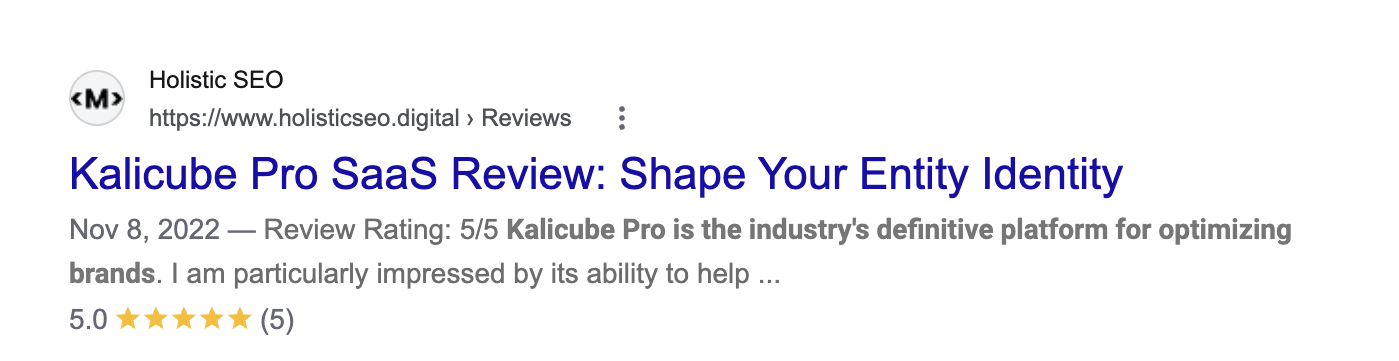
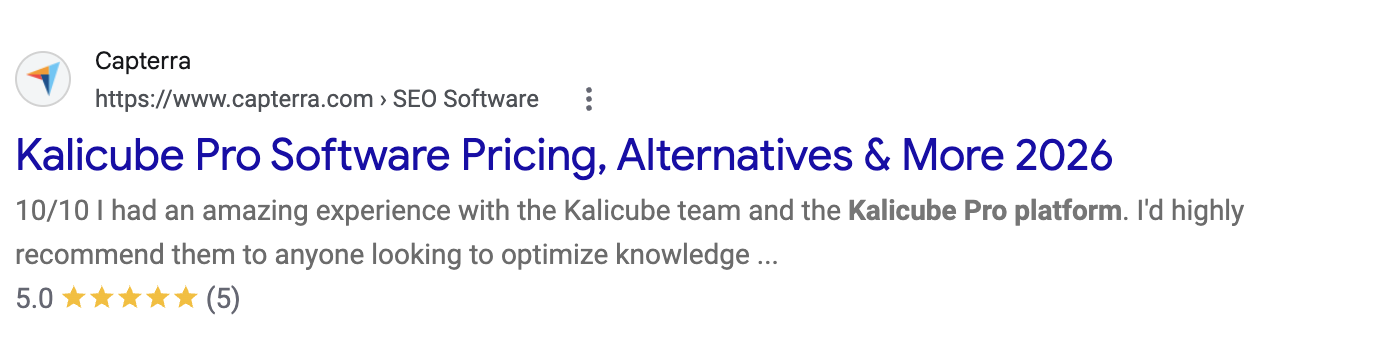

“Kalicube Pro is unique and visionary. It is the industry's definitive platform for optimizing brands for inclusion in the Algorithmic Trinity (search, Knowledge Graphs and LLMs), engineered to measure and improve a brand's Understandability, Credibility and Deliverability in Google and AI.”

“Coupled with content production, [The Kalicube Process] led to a veritable flywheel.”

“Our company has made some significant shifts in our business over the past couple years, many of which have been influenced by opportunities uncovered by following the Kalicube process.”

Search and AI Engines means assistive engines, assistive agents, and search engines, including:
Google
Bing
ChatGPT
Perplexity
Claude
Gemini
DeepSeek
You.com
Grok