

How Your Company Can Build One Source of Truth That Trains AI Assistants and Agents to Recommend You
Published · Written by Jason Barnard
Kalicube calls this method Harvest, Codify and Distribute: find the facts, agree on one correct version and send them in the format each channel needs.
Your company needs one source of truth before it can train AI assistants
Most companies do not lack information. The information is scattered across people's heads, documents, databases, webpages, profiles and presentations. Each place tells a slightly different version of the story. An AI assistant cannot know which version is correct.
One source of truth gives your company one agreed account of who you are, what you do, who you serve and why you are credible. Every public channel then starts from those same facts.
Here, training an AI assistant means repeatedly giving it clear, consistent and corroborated information that it can retrieve and reuse. It does not mean changing the assistant's foundation model.
Search and AI Engines reuse facts they can verify
A useful source of truth contains three kinds of information:
- A verifiable fact is a concrete statement the page makes and a person or machine can check.
- New information is a specific detail that a generic page could not claim, such as a date, role, place, work, number or named organisation.
- A credible fact is new information connected to evidence, such as a date, source, named third party or corroborating webpage.
"We help businesses grow" is a slogan. It gives an AI assistant nothing specific to repeat or cite. A named offer, client, result, date and source give it useful information.
Harvest finds the facts your company already knows
Harvest means finding the important decisions and facts that already exist inside your company. These include the official name, the offers, the people who do the work, the clients each offer serves, important dates and third-party proof.
Without this step, every team and every channel reconstructs the story from memory. That creates gaps and contradictions.
Codify turns the facts into one consistent source of truth
Codify means agreeing on one correct version of each important fact and storing those facts in a structured form. Your company then has one official name, one description of each offer, one account of who each offer serves and one set of proof.
Your website, profiles, articles, applications and feeds can all use that source. When the source changes, every channel can receive the same update.
Distribute sends the same facts in the format each channel needs
Distribute means taking the agreed facts and adapting them to the technical, machine-readable format of each channel. The source stays the same. Only the delivery format changes. The same facts can become:
- visible HTML on your website;
- schema markup that matches that HTML;
- an API, MCP or web MCP;
- an application or advertising feed; or
- a profile or page on another website you can edit.
Schema markup is one useful format, but it is not the source of truth. A new AI channel might ask for a different format. Your company should adapt the delivery, not rebuild the facts.
Kalicube Pro organizes the source and its agents deliver it
Kalicube Pro is the platform for Assistive Agent Optimization (AAO). SEO, GEO and AEO are subsets of AAO, brought together in one operating system. Kalicube Pro organizes the source of truth. Its agents adapt and deliver that source to each channel.
Claim Frame Prove keeps each statement useful. The claim states the fact. The frame explains why that fact matters. The proof connects the fact to evidence outside your company. Together, they tell a clear and corroborated story about who you are, what you do, who you serve, and why you are credible.
Search finds and ranks your company. AI assistants understand it, trust it and recommend it. In agentic commerce, an agent understands and trusts your company, then being chosen and acting happen as one step. That action can include buying.
Client pages already give AI assistants more usable facts than the open web
The gold standard is jasonbarnard.com and kalicube.com. Those sites use the full Kalicube system and push the method as far as it currently goes.
Clients have already done this. Some use the full Kalicube delivery system. Others apply the method through their own workflows. In both cases, they organize and publish more clear, specific and corroborated information than a typical open-web page.
The client pages are the success. The monthly count compares them with the gold standard and with ordinary company and person pages on the open web.
The monthly panel measures the same pages with the same rules
The count below uses a fixed set of pages. An agent reads only the text on each page and lists its facts. The software counts that list. A fact stated in both the visible text and the schema markup counts once.
A generic statement does not count as new information. A fact counts as credible only when the page connects it to evidence. People and companies are counted separately. A page with no stored text waits rather than receiving a zero.
The panel uses the same pages and the same rules each month. That makes the new result comparable with the previous result.
The block below updates when the month's count is stored. The words of this article stay. The numbers move.
This month's count compares people and companies on the gold standard, client pages, and the open web
The first monthly count has not finished. This block fills in as each page on the fixed panel returns. People and companies are counted apart. It shows verifiable facts, new information, and credible facts. It is not a score out of 100.
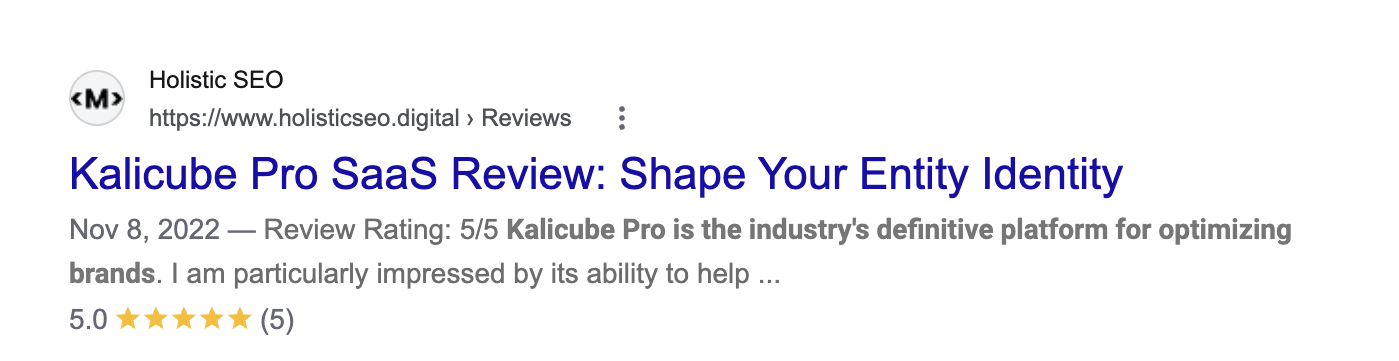


“Kalicube Pro is unique and visionary. It is the industry's definitive platform for optimizing brands for inclusion in the Algorithmic Trinity (search, Knowledge Graphs and LLMs), engineered to measure and improve a brand's Understandability, Credibility and Deliverability in Google and AI.”

“Coupled with content production, [The Kalicube Process] led to a veritable flywheel.”

“Our company has made some significant shifts in our business over the past couple years, many of which have been influenced by opportunities uncovered by following the Kalicube process.”

Search and AI Engines means assistive engines, assistive agents, and search engines, including:
Google
Bing
ChatGPT
Perplexity
Claude
Gemini
DeepSeek
You.com
Grok